Ever wondered how a machine can apply such immense force with precision? Hydraulic press machines do just that, transforming industries by using hydraulic power to shape, press, and mold materials.
In this article, we’ll dive into how these machines work. You’ll gain insights into their principles, types, benefits, and real-world applications, with a focus on SHANDONG FIN CNC MACHINE CO., LTD.'s innovative hydraulic presses.
What is a Hydraulic Press Machine?
Overview of Hydraulic Press Technology
A hydraulic press machine is a device that uses hydraulic fluid to generate force, which is then applied to the material being processed. The basic mechanism relies on Pascal's Law, which states that any change in pressure in a confined fluid will be transmitted undiminished throughout the fluid. This principle enables hydraulic presses to generate enormous amounts of force with relatively little input.
Hydraulic press machines, such as those manufactured by FIN CNC Machine Co., Ltd., are designed to apply high pressure with precision control, making them ideal for various industries, including automotive, aerospace, and metalworking. By using a servo-hydraulic system, these presses can control the amount of force applied, allowing for high-precision results.
A hydraulic press machine works by converting the energy stored in hydraulic fluid into mechanical force. The fluid is pumped into a cylinder under pressure, which moves a piston to exert force on the material being processed. This pressurized fluid is typically oil, although other hydraulic fluids can be used, depending on the machine's application.
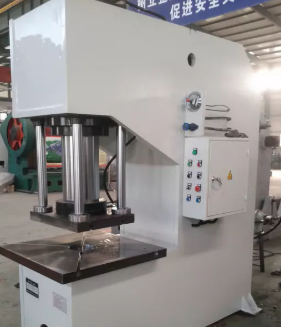
Common Applications of Hydraulic Press Machines
Hydraulic presses are used across several industries due to their versatility and ability to generate high force with precision. Some of the most common applications include:
Industry | Applications |
Automotive | Shaping body panels, pressing engine components, and forming structural parts. |
Metalworking | Bending, forging, and stamping metals to create parts for machinery and tools. |
Construction | Manufacturing heavy machinery components, such as beams, gears, and frames. |
Aerospace | Forming high-precision components for aircraft and spacecraft. |
Medical Devices | Creating parts for medical equipment, ensuring high precision and safety. |
The versatility of hydraulic press machines makes them suitable for a wide variety of tasks, from shaping large structural elements to producing small, intricate parts with high accuracy. FIN CNC's Hydraulic Press Machines are engineered for applications like drawing steel, pressing components, and precision shaping of metal plates, ensuring that every piece produced meets the highest standards.
The Working Principle of a Hydraulic Press Machine
How Pressure is Generated in a Hydraulic Press
In a hydraulic press machine, pressure is generated when hydraulic fluid is forced into the cylinder. According to Pascal’s Law, the pressure exerted on the fluid is transmitted uniformly across the entire fluid, allowing it to transfer force to the piston. The hydraulic pump sends pressurized fluid into the cylinder, causing the piston to move, which in turn applies force to the material placed in the press.
This continuous and uniform pressure application is one of the primary advantages of hydraulic presses. Unlike mechanical presses, which apply peak force at a specific point, hydraulic presses can apply consistent pressure throughout the stroke. This ability to vary the pressure allows hydraulic presses to handle a wide range of tasks, such as deep drawing and forming thick plates, with great flexibility and control.
Components of a Hydraulic Press Machine
A hydraulic press consists of several key components, each of which plays a crucial role in the machine’s operation:
Component | Function |
Hydraulic Pump | Moves the hydraulic fluid through the system to generate pressure. |
Cylinder and Piston | Converts hydraulic pressure into mechanical force to shape or mold materials. |
Hydraulic Fluid | Acts as the medium through which pressure is transmitted, while also lubricating moving parts. |
Control Valves | Regulate the flow of hydraulic fluid and control the pressure applied. |
Pressure Relief Valve | Ensures that the pressure doesn’t exceed safe limits, preventing equipment failure. |
Each component works together in a harmonious system, ensuring that the hydraulic press machine operates smoothly and efficiently. FIN CNC Machine Co., Ltd.’s models are equipped with intelligent force monitoring, which helps to maintain consistent pressure and ensure that parts are pressed to precise specifications.
Understanding the Role of Force and Motion
The force generated by a hydraulic press is applied gradually and continuously over the stroke. The flexibility of the hydraulic system allows for a controlled application of force, making the process suitable for tasks that require precision. Whether it’s deep drawing or pressing smaller parts, hydraulic presses excel at delivering smooth and consistent results, reducing issues like material springback, which can be problematic in mechanical presses.
Advantages of Using a Hydraulic Press Machine
Efficiency and Precision
Hydraulic presses offer unparalleled efficiency, especially when compared to mechanical presses. By utilizing servo-hydraulic controls, FIN CNC’s hydraulic presses can precisely adjust force and speed throughout the stroke. This capability enables operators to perform tasks such as deep drawing and forming thick plates with greater control and accuracy. The flexibility in force application ensures that the press can handle a variety of jobs quickly and efficiently, optimizing production time and reducing waste.
Power-to-Size Ratio
Hydraulic presses provide an excellent power-to-size ratio, making them ideal for situations where high force is required in a compact form. FIN CNC Hydraulic Press Machines are designed to generate immense force without occupying a large amount of space, which is beneficial in factories where space is limited but power needs to be maximized. This makes hydraulic presses a preferred choice in many manufacturing environments, as they offer high capacity in a smaller, more manageable footprint.
Versatility and Adaptability
The versatility of hydraulic press machines lies in their ability to handle a wide range of materials and applications. Whether you need to form thick steel plates, press small precision components, or create large structural parts, hydraulic presses can be easily adapted to meet the requirements of the job. FIN CNC’s hydraulic presses come with features like programmable dwell times, anti-rebound logic, and recipe storage, which make them suitable for various jobs across multiple industries.
Types of Hydraulic Press Machines
C-Frame Hydraulic Press
The C-frame hydraulic press features a compact and open-frame design, ideal for smaller applications. This type of press is particularly suitable for lighter tasks such as metal stamping, light assembly work, and smaller-scale shaping of materials. Its design allows for easier access to the workpiece, which makes it ideal for operations where precision and visibility are required.
H-Frame Hydraulic Press
The H-frame hydraulic press is a more robust and durable design, often used for heavy-duty applications. Its structure allows it to withstand higher levels of force, making it suitable for tasks like forging and heavy metalworking. The H-frame design is particularly advantageous in industries that require high-pressure operations, such as the production of machinery parts and heavy construction components.
Four-Post Hydraulic Press
The four-post hydraulic press is designed for applications requiring high precision and uniform force. It ensures that pressure is evenly distributed across the entire surface of the material, making it ideal for producing intricate components and parts with tight tolerances. FIN CNC's Four-Post Hydraulic Press offers superior control and stability, making it perfect for industries like medical device manufacturing, aerospace, and high-precision metalworking.
Applications of Hydraulic Press Machines in Different Industries
Automotive Industry
In the automotive industry, hydraulic presses are critical for shaping body panels, pressing engine components, and forming parts of automotive structures. The high-precision control provided by FIN CNC's Hydraulic Press Machines ensures that each part is shaped consistently and accurately. Hydraulic presses are also used to assemble car parts, ensuring uniformity in production and helping to maintain high-quality standards across the automotive industry.
Metalworking Industry
Hydraulic presses are used extensively in metalworking for tasks such as bending, forging, and stamping metal. The ability of hydraulic presses to apply consistent pressure over a wide range of materials makes them invaluable in producing parts used in construction, manufacturing, and other heavy-duty industries. Whether it's forging heavy components or creating smaller precision parts, hydraulic presses from FIN CNC Machine Co., Ltd. offer unparalleled versatility.
Construction and Heavy Equipment
Hydraulic presses play a pivotal role in the construction and heavy equipment industries, where large, complex components must be shaped and formed. Hydraulic presses are used to manufacture structural components, gears, and frames for machinery, with FIN CNC's Hydraulic Press Machines delivering the power and precision needed to handle these heavy-duty tasks.
The Role of Automation and Customization in Hydraulic Press Machines
Automation in Hydraulic Press Machines
In the modern manufacturing environment, automation is becoming increasingly important for improving production efficiency and reducing human error. Hydraulic press machines, including those manufactured by FIN CNC Machine Co., Ltd., are no exception. The integration of automation technology into hydraulic press systems offers several significant benefits, including faster production times, enhanced precision, and reduced labor costs.
Automated hydraulic presses are designed to perform repetitive tasks without the need for constant manual intervention, ensuring that parts are consistently formed with high precision. Automation features can include programmable logic controllers (PLCs) for adjusting force and speed, robotic arms for material handling, and advanced sensors for monitoring pressure and positioning. These systems ensure that the hydraulic press operates continuously and efficiently, even in demanding industrial settings.
One of the key advantages of automation in hydraulic presses is the reduction of operator fatigue and the improvement of safety. By automating repetitive tasks, operators can focus on higher-level oversight and maintenance, ensuring the press operates smoothly and safely. Additionally, automated presses are less prone to human error, reducing the likelihood of defective parts and minimizing waste.
Customization and Flexibility in Hydraulic Press Machines
Another important factor to consider when choosing a hydraulic press machine is customization. Every manufacturing process is unique, and the ability to tailor a hydraulic press to meet specific production needs is essential. FIN CNC Machine Co., Ltd. offers highly customizable hydraulic presses that can be adapted to a wide range of applications, from large-scale industrial manufacturing to more specialized tasks.
Customization options can include adjusting the size and capacity of the press, incorporating specific tooling and dies, and selecting additional features such as automatic load handling, pressure control systems, and custom software for advanced monitoring. By working with a hydraulic press machine manufacturer like FIN CNC, companies can design a press that meets their exact specifications and production requirements.
For example, businesses in the automotive industry may require hydraulic presses with specialized tooling for stamping car parts, while a medical device manufacturer may need precision presses that can handle delicate components with high accuracy. The ability to customize the hydraulic press ensures that manufacturers can optimize their production lines for maximum efficiency and quality.
The Future of Hydraulic Press Machines
Looking ahead, the future of hydraulic press machines will likely involve continued advancements in automation, precision, and energy efficiency. With the increasing demand for high-quality, complex parts, manufacturers are focusing on improving the adaptability and versatility of hydraulic presses to handle a wider range of materials and production methods.
One potential advancement is the integration of Industry 4.0 technologies into hydraulic press systems. This involves using IoT (Internet of Things) sensors and data analytics to monitor machine performance in real-time, enabling predictive maintenance, optimizing production schedules, and providing operators with immediate feedback on machine status. By implementing these technologies, manufacturers can reduce downtime, lower maintenance costs, and improve overall machine reliability.
Additionally, as environmental concerns continue to grow, there is an increasing emphasis on making hydraulic presses more energy-efficient. Innovations in hydraulic fluid technology, system design, and energy recovery mechanisms will help reduce the environmental impact of hydraulic presses while improving performance and reliability.
Conclusion
In conclusion, hydraulic press machines are indispensable tools in modern manufacturing, offering immense power, flexibility, and precision for a wide range of applications. Whether you are shaping steel plates, pressing intricate components, or forming large structural elements, hydraulic press machines from FIN CNC Machine Co., Ltd. provide the control and force necessary for high-quality production.
As industries continue to evolve, the integration of automation, customization, and advanced technologies will further enhance the capabilities of hydraulic presses, making them even more efficient and versatile. Whether you need a press for mass production or a specialized machine for precise tasks, working with an experienced hydraulic press machine manufacturer like FIN CNC ensures that you get a machine that meets your specific needs.
By choosing the right hydraulic press machine, businesses can not only improve their manufacturing efficiency but also enhance product quality, reduce waste, and increase safety. As hydraulic press technology continues to advance, it will play an even more critical role in shaping the future of manufacturing.
FAQ
Q: What is a hydraulic press machine?
A: A hydraulic press machine is a device that uses hydraulic force to press, shape, or form materials. It works by applying pressure from hydraulic fluid, transferring it through cylinders and pistons to generate force. This allows for precise control over material manipulation in industries like automotive, metalworking, and construction. A hydraulic press machine manufacturer designs these systems to offer reliability and high force in a compact setup.
Q: How does a hydraulic press machine work?
A: A hydraulic press machine works by using Pascal’s Law, which states that pressure applied to a confined fluid is transmitted equally throughout. Hydraulic fluid is pumped into cylinders, pushing pistons to generate immense force. This force is used to press or shape materials, providing efficient results with adjustable pressure, especially in manufacturing processes. Hydraulic press machine manufacturers typically offer customized models based on specific industrial needs.
Q: Why choose a hydraulic press machine for manufacturing?
A: A hydraulic press machine provides high precision, power-to-size ratio, and adaptability, making it ideal for various manufacturing tasks like forming, bending, and stamping materials. It is especially beneficial when you need adjustable force, which allows for deeper drawing or precise part formation. A hydraulic press machine manufacturer will ensure the press is customized to fit your production needs, enhancing efficiency and reducing material waste.
Q: What are the benefits of using a hydraulic press machine?
A: The benefits of using a hydraulic press machine include high force application, precise control over pressure, and the ability to work with a wide variety of materials. These presses improve efficiency, reduce the risk of errors, and are adaptable to different tasks, such as metal stamping, plastic molding, and forming thick plates. A hydraulic press machine manufacturer can also provide customization to meet specific production goals.


