What powers the creation of everything from car parts to aerospace components? It’s the hydraulic press machine, a powerhouse of precision and force. These machines are revolutionizing manufacturing by shaping materials with incredible accuracy. In this article, we’ll dive into how hydraulic press machines work, their key applications, and how SHANDONG FIN CNC MACHINE CO., LTD. is leading the charge in innovation.try.
Introduction to Hydraulic Press Machines
The Role of Hydraulic Press Machines in Industry
Hydraulic press machines are powerful tools that use hydraulic pressure to shape, mold, or compress materials. These machines are widely used in various industries for tasks that require substantial force applied with high precision. From automotive and aerospace manufacturing to metalworking and appliance production, hydraulic presses ensure consistent quality, speed, and efficiency across different manufacturing operations.
Whether used in small-scale workshops or large manufacturing plants, hydraulic presses have earned their place in heavy-duty production lines due to their ability to exert immense force while maintaining fine control over the process. Their versatility allows them to be used in a variety of applications, from punching metal to shaping and bending complex components. The hydraulic press stands out because it can apply a smooth, continuous force across the entire stroke, making it suitable for handling materials of various hardness and shapes.
Why Hydraulic Press Machines Matter
Understanding the function and significance of hydraulic press machines is vital for industries looking to improve their production processes. The ability to exert controlled force over a wide range of materials allows hydraulic presses to produce high-quality parts with minimal waste. Whether producing mass-produced components in the automotive industry or intricate parts for aerospace applications, hydraulic presses ensure high precision and uniformity, which is crucial for meeting industry standards.
The flexibility and control offered by hydraulic presses provide manufacturers with an essential tool to meet the increasing demand for precision, repeatability, and speed in their operations. The choice of hydraulic press machines allows businesses to not only improve production capabilities but also reduce the likelihood of defects and waste, making it an indispensable part of modern manufacturing.
What is a Hydraulic Press Machine?
Basic Explanation of Hydraulic Press Machine
A hydraulic press machine utilizes the principles of hydraulics—using pressurized hydraulic fluid to generate force. When hydraulic fluid is pumped into the cylinder, it creates pressure that pushes the piston, which then applies the force to the material being worked on. The force exerted by the press can be adjusted by changing the fluid pressure, making it an incredibly versatile and precise machine for various tasks, such as molding, shaping, and pressing materials.
This system allows hydraulic presses to exert much higher forces compared to mechanical presses, while maintaining a high degree of control over the force throughout the stroke. This characteristic is especially useful in applications that require gradual force, such as deep drawing, molding, and bending.
Components and Mechanics of a Hydraulic Press
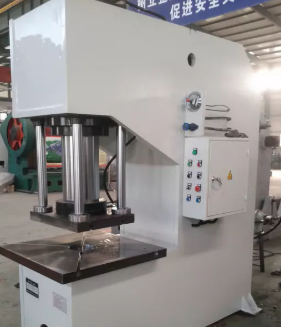
The hydraulic press machine consists of several key components, each playing an essential role in the functioning of the machine:
Component | Description |
Hydraulic Fluid | The pressurized fluid that transmits force within the system. |
Pump | Pumps the hydraulic fluid into the hydraulic cylinder. |
Hydraulic Cylinder | Houses the piston, and the pressure applied within the cylinder generates the necessary force. |
Piston | Moves under pressure to exert force on the material. |
Control Valves | Regulate the flow of hydraulic fluid and control the machine's force and operation. |
The combination of these components allows the machine to produce high levels of force with precision. The system's design ensures smooth and consistent operation, reducing the likelihood of mechanical failure and ensuring high-quality results with each press cycle.
Common Uses of a Hydraulic Press Machine
Manufacturing and Industrial Applications
Hydraulic press machines are essential tools in a variety of manufacturing and industrial sectors. For example, in automotive manufacturing, they are used for tasks such as stamping parts for car bodies, pressing engine components, and forming other essential structural elements. Hydraulic presses ensure that these parts are shaped with high precision, ensuring that every component meets strict quality standards for safety and functionality.
In industries like appliance manufacturing, hydraulic presses are commonly used for shaping metal or molding plastic components. These machines ensure that the desired shapes are created efficiently, and the quality of the final products is consistent. Furthermore, the precise control over the force exerted allows manufacturers to achieve uniform results, even when working with complex and varying material types.
Compression and Molding
One of the key advantages of hydraulic presses is their ability to mold and compress materials such as rubber, plastic, and metal. For example, in the production of rubber tires, hydraulic presses are used to compress rubber into molds to create consistent, high-quality tires. Similarly, these machines are crucial in the production of molded plastic parts, where the plastic is heated and pressed into molds to take on the desired shape.
The precise pressure control of hydraulic presses ensures that the molding process is efficient and produces parts that are uniform in size, weight, and quality. SHANDONG FIN CNC MACHINE CO., LTD. specializes in hydraulic presses that deliver exceptional forming power, making them ideal for industries like construction, power generation, and manufacturing large structural components.
Shaping and Forming
In addition to molding and pressing, hydraulic presses are widely used for metal forming processes such as stamping, punching, and bending. The ability to apply a controlled, steady force allows manufacturers to shape metal sheets into intricate designs without damaging the material. For example, in aerospace manufacturing, hydraulic presses are used to form parts like turbine blades and fuselage sections, where high strength and precise shape are essential for the safety and performance of the final product.
Hydraulic Press Machine in Automotive and Aerospace
Critical Role in Automotive Manufacturing
Hydraulic presses are indispensable in the automotive industry, where they are used in the mass production of car components. SHANDONG FIN CNC MACHINE CO., LTD. hydraulic press machines are designed to produce parts with extreme precision, ensuring that every component fits perfectly and meets high standards for safety and performance. These presses are used for a wide range of tasks, such as stamping metal sheets, forming structural elements like chassis and body panels, and pressing engine components.
In the production of automotive parts, the need for high precision and consistency is crucial. FIN Hydraulic Press Machines are equipped with advanced features such as servo-hydraulic controls, which allow manufacturers to fine-tune the pressure applied to the material, ensuring uniformity and quality across all parts produced.
Applications in Aerospace Manufacturing
In the aerospace industry, the demand for lightweight and durable components is high. SHANDONG FIN CNC MACHINE CO., LTD.'s hydraulic presses are designed to meet these demands by providing precise shaping and forming of materials like titanium, aluminum, and composite materials. These materials require a delicate balance between force and precision, as they must be shaped without compromising their strength or integrity.
Hydraulic presses are used in the production of aerospace components such as turbine blades, wing sections, and fuselage parts. The advanced hydraulic systems of these presses allow manufacturers to apply controlled, adjustable force, ensuring that each component meets the exacting standards required for aerospace applications.
Advantages of Using a Hydraulic Press Machine
Efficiency and Power
One of the key advantages of hydraulic press machines is their ability to deliver immense force with relatively low energy consumption. Hydraulic presses, like those from SHANDONG FIN CNC MACHINE CO., LTD., are capable of handling larger and more complex tasks without sacrificing power or precision. These machines are built to withstand the demands of heavy-duty applications and ensure smooth, continuous operations.
The use of advanced hydraulic systems in these machines enables them to apply consistent pressure throughout the entire press cycle, ensuring high-quality results even when working with tough materials. The FIN Hydraulic Press is ideal for heavy-duty applications like pressing large steel components, where consistent force and precision are required.
Precision and Control
Hydraulic press machines offer superior precision compared to mechanical presses. The ability to adjust the pressure throughout the entire stroke allows operators to control the force with fine accuracy. This flexibility is particularly important in industries like aerospace, automotive, and medical device manufacturing, where precise measurements and tolerances are essential for safety and performance.
For example, SHANDONG FIN CNC MACHINE CO., LTD.'s hydraulic presses integrate servo-hydraulic controls and intelligent force monitoring systems that enable smoother operations and reduce springback in parts. These advanced features ensure that each press is executed with the utmost precision, making the machines ideal for producing parts that must meet rigorous quality standards.
Hydraulic Press Machine vs. Mechanical Press
Difference in Functionality
Hydraulic presses and mechanical presses function differently, which makes them suitable for different applications. Hydraulic presses generate pressure through hydraulic fluid, offering the ability to apply a controlled, adjustable force throughout the stroke. This is particularly useful for tasks like deep drawing and precision shaping, where the force needs to be adjusted gradually.
In contrast, mechanical presses apply a peak force at a fixed point in the cycle, making them better suited for high-speed tasks like punching, cutting, or shearing. While mechanical presses are faster, they do not offer the same level of flexibility or precision as hydraulic presses.
Feature | Hydraulic Press Machine | Mechanical Press Machine |
Force Application | Adjustable and consistent throughout the stroke | Peak force at a fixed point |
Ideal for | Deep drawing, bending, precision shaping | Punching, cutting, shearing |
Flexibility | High flexibility for various tasks | Limited flexibility, specific tasks |
Speed | Slower due to adjustable pressure | Faster, suitable for high-speed tasks |
Control | High precision and control | Less control over force application |
Applications Where Each Press Excels
● Hydraulic Press: Best for applications that require gradual, controlled force, such as deep drawing, forming thick plates, and precision straightening. Hydraulic presses are ideal for industries like automotive, aerospace, and construction, where high precision and repeatability are essential.
● Mechanical Press: More suitable for high-speed, high-volume tasks such as punching, cutting, and shearing, where the peak force is needed to achieve quick results.
Safety Considerations and Maintenance of Hydraulic Press Machines
Key Safety Features
Safety is paramount when operating hydraulic press machines, especially given the immense forces involved. Key safety features include pressure gauges, emergency stop buttons, safety shields, and automatic shut-off systems that help prevent accidents and injuries. Regular inspection of components like hydraulic hoses and seals is necessary to ensure safe operation and avoid malfunctions.
Maintenance Practices for Longevity
To keep hydraulic press machines running smoothly, regular maintenance is essential. Operators should regularly check the hydraulic fluid levels, inspect the machine for leaks or wear, and clean the system to prevent blockages. Well-maintained machines perform more efficiently, have fewer breakdowns, and last longer, reducing the need for costly repairs and ensuring consistent production performance.
Conclusion
Hydraulic press machines, such as those offered by SHANDONG FIN CNC MACHINE CO., LTD., are essential in industries like automotive, aerospace, construction, and manufacturing, providing high precision, repeatability, and flexibility for producing top-quality components. As technology advances, these machines will continue to evolve, incorporating automation, intelligent monitoring, and improved energy efficiency. SHANDONG FIN CNC MACHINE CO., LTD. is at the forefront of these innovations, offering customizable hydraulic presses to meet the specific demands of modern manufacturing. When selecting a hydraulic press machine, it’s crucial to work with a reputable manufacturer like SHANDONG FIN CNC MACHINE CO., LTD., as their expert team can help design and implement a tailored press solution that ensures optimal performance, efficiency, and durability for your production needs.
FAQ
Q: What is a hydraulic press machine used for?
A: A hydraulic press machine is used to apply immense force to shape, form, or compress materials like metal, plastic, and rubber. It's commonly used in manufacturing industries for tasks such as stamping, molding, and bending.
Q: How does a hydraulic press machine work?
A: A hydraulic press machine operates by using pressurized hydraulic fluid to generate force, which moves a piston to compress or shape materials. This allows for precise control and high force, ideal for metal forming or molding plastic components.
Q: Why should I choose a hydraulic press machine for my manufacturing needs?
A: A hydraulic press machine offers superior precision and flexibility, allowing manufacturers to shape large or complex parts. It’s ideal for industries like automotive, aerospace, and construction due to its power and accuracy.
Q: What are the advantages of using a hydraulic press machine?
A: Hydraulic press machines are known for their flexibility, efficiency, and precision. They provide adjustable force, which is essential for handling various materials and applications, making them highly versatile and cost-effective in production.
Q: What should I look for when choosing a hydraulic press machine manufacturer?
A: When choosing a hydraulic press machine manufacturer, look for experience, customization options, and advanced features like servo-hydraulic controls. Ensure they offer quality support, maintenance, and consultation to meet your production needs.


