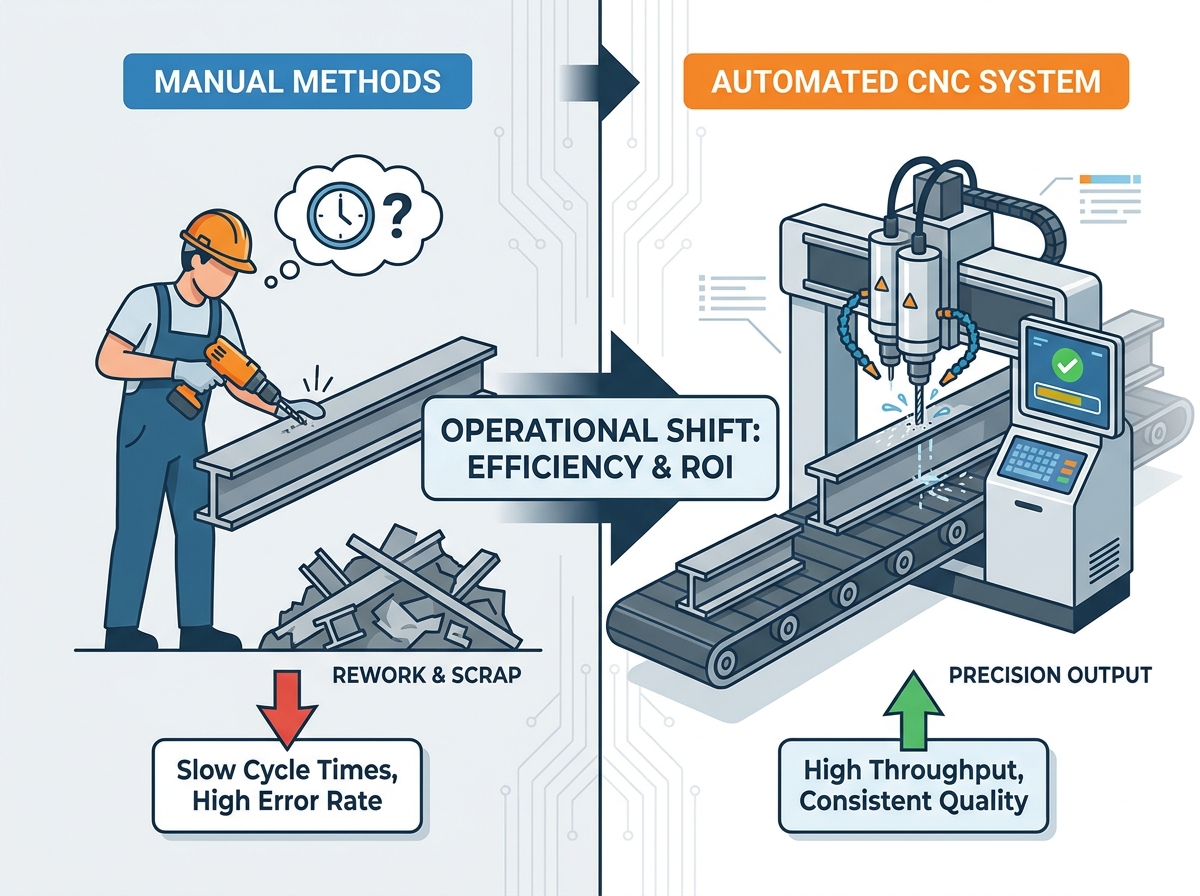
Modern steel fabrication faces compounding pressures daily. You see tightening project margins shrinking your profits. Skilled labor shortages cripple production schedules. Stringent compliance tolerances leave zero room for manual errors. Shifting from manual layout and magnetic drilling to an automated CNC setup is no longer a luxury. It stands as a baseline requirement for remaining competitive in structural steel bidding. You cannot win major contracts relying on outdated methods. Upgrading to an automated system shifts fabrication bottlenecks entirely. This forces buyers to strictly evaluate equipment capabilities, implementation risks, and vendor reliability before capital investment. You need a complete understanding of how these machines transform workflows. We will explore the exact engineering capabilities required for heavy profiles. You will also learn how to choose the right partner. This ensures your investment drives immediate operational success.
Technical Evaluation: Spindle torque, multi-axis coordination, and DSTV/BIM software integration are the most critical metrics for assessing machine viability.
Implementation Reality: Success depends heavily on proper footprint planning, operator training, and foundation stability.
Vendor Selection: Choosing a qualified CNC beam drilling machine supplier with robust after-sales SLA and localized parts is as critical as the machine specs.
The Cost of Traditional Methods vs. an Automated Beam Drilling Machine
Traditional manual drilling drains resources silently. Layout personnel spend hours reading blueprints. They measure every dimension by hand. Center-punching introduces further variations. A minor slip ruins the alignment entirely. These human errors compound rapidly during assembly. Rework becomes an accepted daily reality. Cycle times stretch far beyond original estimates. You lose money on every misplaced hole.
We measure success by throughput transformation. We must transition away from single-hole manual feeds. Operators should no longer pull down heavy drill press handles manually. We seek continuous, multi-spindle autonomous processing. A true automated beam drilling machine measures the material automatically. It positions the beam instantly. It drills multiple axes simultaneously. The machine verifies the work without constant human intervention.
Material handling logistics often paralyze shop floors. Overhead cranes bottleneck most fabrication shops. Moving a heavy beam takes time. Flipping it to drill the other side takes even longer. Automated material handling solves this logistical nightmare. In-feed roller conveyors stage the next piece automatically. Automated cross-transfers pull finished beams away from the work zone. This reduces crane dependency entirely. Your material flows through the shop smoothly.
Core Engineering Capabilities of a Structural H-Beam Drilling Line
A modern structural H-beam drilling line utilizes three independent spindle axes. One targets the web. Two others attack the top and bottom flanges. They operate concurrently. This capability eliminates the need to rotate massive steel profiles. Part-handling time drops to near zero. Overall throughput skyrockets as a direct result.
Heavy structural profiles require specialized drilling mechanics. Drilling through thick steel generates massive heat. High-pressure through-tool coolant systems manage this thermal load perfectly. Coolant blasts directly through the center of the drill bit. This provides precise chip evacuation. It forces metal shavings out of the hole instantly. The tool stays cool and sharp during continuous operation.
Standard twist drills dull quickly under heavy loads. Carbide tooling offers superior cutting speeds. However, carbide is brittle. It shatters under intense vibration. These machines feature incredibly rigid steel frames. They utilize high-RPM spindles built for absolute stability. This rigidity maximizes your carbide drill bit lifespan. You lower consumable costs significantly over time.
Drilling holes represents only one part of the job. Downstream assembly often causes secondary delays. Welders struggle to identify correct parts manually. Optional integrated scribing features solve this problem fast.
Eliminates manual chalking errors on the busy shop floor.
Provides permanent weld symbols for assemblers to read easily.
Maintains part traceability throughout the entire project lifecycle.
Reduces blueprints checking time during final steel erection.
Evaluating High-Precision Steel Structure Equipment: Specs That Matter
Motor power dictates machine capability. You must read motor kilowatt (kW) ratings carefully. High kW ratings indicate strong cutting power. You must balance this against RPM specs. Intended material thickness dictates your specific needs. Harder alloys demand higher torque at lower speeds. Fast feed rates require continuous power delivery. Underpowered spindles stall during heavy plunge cuts.
Structural joints require precise alignment to pass inspection. Acceptable industry tolerances typically hover around ± 0.5mm per 10m of material length. Sophisticated drive systems achieve these tight margins. Servo-driven ball screws provide unmatched repeatability for the drill heads. Rack-and-pinion systems offer robust accuracy for moving long steel profiles along the heavy bed.
Every fabricator handles different contract types. You must match the machine's processing envelope to your most common jobs. Check the maximum throat depth carefully. Verify the acceptable web height limits. Confirm the maximum flange width capacity. Buying a machine too small limits your bidding power. Buying one too large wastes available capital.
Seamless software integration remains an absolute necessity. High-precision steel structure equipment requires intelligent data parsing. Manual data entry causes critical errors. Your detailing department uses software like Tekla or SDS/2. These programs export standard DSTV files. The CNC control must process these files flawlessly. It converts digital models into physical machine movements instantly.
Standard Specifications for Structural Steel Processing
Machine Element
Traditional Manual Method
Automated CNC System
Positioning System
Manual tape measurement
Servo-driven ball screws
Typical Accuracy
± 2.0mm to 3.0mm per part
± 0.5mm per 10m length
Tooling Type
Standard High-Speed Steel (HSS)
Solid Carbide / Inserted Carbide
Average Setup Time
15 to 30 minutes per beam
Under 2 minutes automatically
Implementation Realities for an Industrial Beam Fabrication System
Space dictates overall efficiency. An industrial beam fabrication system commands a massive physical footprint. You cannot simply drop it in an empty corner. Real-world considerations demand strategic shop floor layout planning. You must calculate extensive in-feed and out-feed clearance zones. A sixty-foot beam needs sixty feet of entry space. You also need dedicated scrap removal zones for cleanout.
These machines weigh several tons. Standard shop floors crack under their intense weight. You must pour specialized concrete foundations. Concrete thickness must meet strict vendor engineering specifications. Leveling requirements demand absolute precision during installation. Any slope causes binding in the linear guides. Proper vibration isolation protects the delicate electronic sensors. It maintains long-term drilling precision day after day.
Moving from a manual machinist to a CNC operator poses unique challenges. Old-school machinists rely heavily on physical feel and sound. CNC operation requires distinct software literacy. Operators must understand digital interfaces confidently. They need basic G-code familiarity to troubleshoot errors effectively. Management must provide adequate training time. Rushing the learning curve leads to expensive crashes.
Preventative maintenance dictates machine lifespan. You cannot ignore daily upkeep schedules. Establish strict maintenance protocols from day one to mitigate downtime.
Check central lubrication reservoir levels every morning before starting production.
Clear the automated chip conveyor regularly to prevent mechanical jamming.
Monitor coolant concentrations to ensure optimal tool cooling performance.
Inspect servo cables for wear and tear weekly.
How to Shortlist a CNC Beam Drilling Machine Supplier
Never accept a machine blindly. Buyers must demand live test cuts. You should insist on a Factory Acceptance Test (FAT). Travel to the manufacturing facility if possible. Bring your own heavy steel profiles to the test. Run your specific DSTV files. Watch the machine perform under real stress. This verifies capability before taking delivery. It exposes flaws before they enter your shop.
Machines break down eventually. How fast will your supplier respond? Evaluate their Service Level Agreements closely. Assess their remote diagnostic capabilities. Can their engineers log into your machine from afar? They must identify software faults instantly. Demand guaranteed on-site response times for hardware failures. Every hour of unexpected downtime bleeds money.
Proprietary components trap you in expensive cycles. If a custom motor burns out, you wait weeks for a replacement. Assess the risk of the consumables ecosystem carefully when choosing a cnc beam drilling machine supplier. Insist on off-the-shelf components. Standard Siemens or Fanuc controllers provide global support networks. Standard ISO tool holders allow you to buy drill bits locally. This keeps your production line moving smoothly.
Conclusion
A CNC beam drilling line represents a transformative capacity multiplier. It is not merely a modern tool replacement. It redefines your entire fabrication tempo completely. You gain the operational power to bid on larger, more complex structural projects. The elimination of manual layout errors ensures your steel erects perfectly on the job site every time.
Take immediate analytical action today. Advise your stakeholders to audit current manual drilling hours. Track your shop scrap rates meticulously for one full month. Build a solid internal business case using this hard data. Do this before requesting formal vendor RFQs. Strategic preparation ensures a highly successful equipment upgrade.
FAQ
Q: What is the expected ROI timeline for an automated beam drilling line?
A: Volume heavily dictates payback periods. Most mid-sized fabricators see complete returns within 18 to 36 months. High-production shops running multiple shifts often achieve ROI faster. The savings stem directly from reduced labor hours and eliminated rework. You also gain the ability to process larger structural steel contracts.
Q: Can these machines process structural shapes other than H-beams?
A: Yes. Advanced systems process a wide variety of structural profiles. You can run steel channels, heavy angles, square tubing, and flat bars. The internal clamping systems adjust automatically to secure different geometries. This versatility allows fabricators to handle diverse project requirements using one central machine.
Q: What are the standard foundation requirements for installation?
A: Most industrial systems require a dedicated, reinforced concrete foundation. You typically need a specific slab thickness to handle massive static loads. Localized slab reinforcement prevents long-term settling. Installation also utilizes heavy-duty leveling pads. These pads isolate the machine from ambient shop floor vibrations, ensuring absolute drilling precision.
Q: How does the software handle complex structural joints or copes?
A: The machine software imports DSTV files directly from your detailing programs. It reads the exact coordinates for every hole and layout mark. For complex thermal copes, the software manages the hand-off perfectly. It drills the necessary holes first, then routes the profile to a secondary thermal coping machine.