Shopping for a hydraulic press can feel overwhelming. You see prices ranging from a few hundred dollars for a benchtop model to tens of thousands for an industrial machine, and the path forward is rarely clear. The core challenge isn't just finding the cheapest option. It's about making the right investment for your specific needs, whether you're running a home workshop, a busy automotive repair facility, or a high-volume production line. Trying to save money with an underpowered press can lead to failed jobs, damaged parts, and serious safety risks. This guide provides a clear decision-making framework. We will help you evaluate hydraulic press costs based on tonnage, critical features, and the total cost of ownership, ensuring you get the right tool for the job.
Key Takeaways
Entry-Level & Benchtop Presses (6-12 Ton): Typically range from $200 to $1,500. Suitable for light-duty tasks like small bearing pressing, jewelry making, and hobbyist fabrication.
Automotive & Fabrication Shop Presses (20-50 Ton): The most common category, priced between $1,500 and $8,000. These H-frame presses are workhorses for pressing bearings, bushings, gears, and general metal forming.
Industrial & Production Presses (50-200+ Ton): Prices start at $10,000 and can exceed $100,000. These are heavy-duty machines for high-volume forging, stamping, punching, and specialized manufacturing, often with CNC integration.
Primary Cost Drivers: The final price is dictated by four key factors: tonnage capacity, frame construction (welded vs. bolted), power source (manual, air, electric), and overall build quality and brand reputation.
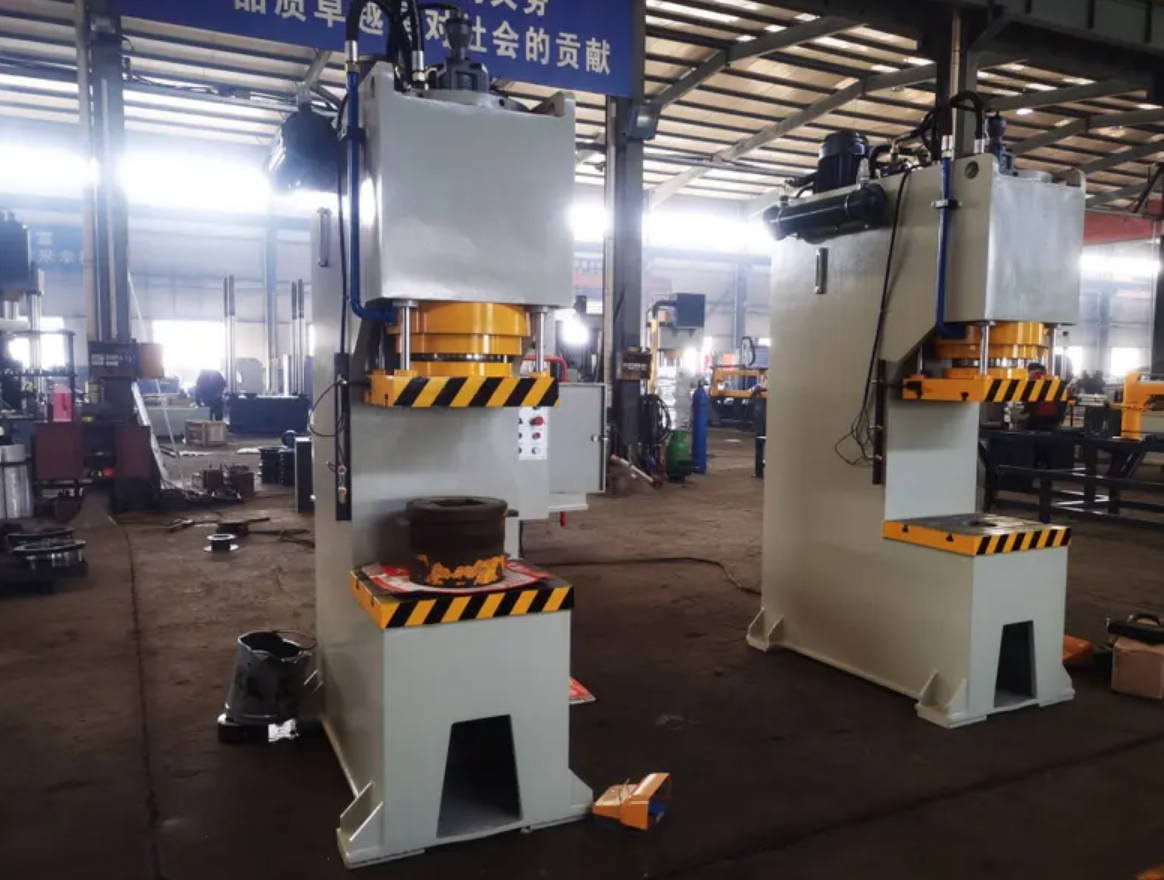
Understanding Hydraulic Press Machine Prices by Category and Capacity
The price of a hydraulic press is directly tied to its capacity and intended application. We can group them into three distinct tiers, each with its own set of features, use cases, and cost expectations.
Tier 1: Benchtop & Light-Duty Presses (Under 20 Tons)
These are the entry point into the world of hydraulic force. Designed for hobbyists, small repair shops, or specific light-duty tasks, they prioritize affordability and a compact footprint over raw power and speed.
Typical Use Cases: Perfect for assembling small components, pressing out U-joints on light vehicles, jewelry making, and general metalwork for hobby projects. They excel at tasks where high force is not the primary requirement.
Key Characteristics: You'll commonly find A-frame designs for maximum compactness or small H-frame models. Operation is almost always via a manual hand pump, which offers good control. Construction is typically bolted together, making them easier to ship and assemble.
Price Expectation: In this tier, you're paying for basic functionality for infrequent or low-force jobs. Durability for continuous use is not the main selling point. Prices generally range from a couple of hundred to just over a thousand dollars.
Tier 2: General-Purpose Shop Presses (20-50 Tons)
This category represents the workhorse of most automotive shops, fabrication facilities, and maintenance departments. A general-purpose Hydraulic Press Machine in this tonnage range offers a superb balance of power, versatility, and cost.
Typical Use Cases: This is the go-to tool for pressing wheel bearings and suspension bushings, seating gears on shafts, light steel fabrication, and straightening bent parts. Its versatility makes it indispensable in a professional environment.
Key Characteristics: The robust H-frame design is standard here, providing stability and a large work area. Power often comes from an air-over-hydraulic pump (shop air assists the hydraulics) or a heavy-duty manual pump. A key feature is the adjustable bed, or bolster, which can be moved up and down to accommodate different workpiece sizes.
Price Expectation: This is an investment in productivity and durability. You should expect a machine built for daily use that will last for years. Prices can range from $1,500 to $8,000, depending on tonnage, brand, and features.
Tier 3: Heavy Industrial Hydraulic Presses (50+ Tons)
When you enter the 50-ton-and-above category, you are moving into capital equipment territory. These machines are built for production-level manufacturing, heavy equipment repair, and specialized industrial processes.
Typical Use Cases: Common applications include high-volume metal forming, forging hot metal, deep drawing sheet metal into complex shapes, and integration into automated assembly lines. They are essential for demanding tasks that require immense, repeatable force.
Key Characteristics: Frames are typically fully welded from heavy-gauge steel for maximum rigidity under extreme loads. Electric hydraulic pumps are the norm, providing the speed and duty cycle required for production. These presses often feature advanced controls, safety light curtains, and the potential for CNC integration for precision tasks, such as those performed by a CNC Machine For Steel Tower.
Price Expectation: As a capital equipment purchase, the focus shifts to return on investment (ROI) through speed, precision, and a high duty cycle. Prices start around $10,000 and can easily exceed $100,000 for specialized, high-tonnage, or custom-built machines.
The Core Cost Driver: Matching Tonnage to Your Application
The single most significant factor determining the price of a hydraulic press is its tonnage. Tonnage is simply the maximum amount of compressive force the press can safely exert, measured in US tons (2,000 pounds of force). Choosing the right tonnage is a critical balancing act.
Under-sizing a press is dangerous and inefficient. If a press is constantly used at its maximum capacity, it will lead to premature wear on the frame and hydraulic components. More importantly, it can result in catastrophic failure or incomplete jobs, posing a significant safety hazard. Conversely, over-sizing a press means you've spent unnecessary capital on a machine that is larger, heavier, and consumes more floor space than you require.
Here is a general framework for matching tonnage to common applications:
| Tonnage Range | Primary Applications | Typical User |
| 10-20 Tons | Pressing small bearings (e.g., alternator), U-joints, straightening motorcycle forks, light-duty assembly. | Hobbyist, Small Engine Repair, Jewelry Maker |
| 20-30 Tons | Automotive wheel bearings, suspension bushings, axle shafts, differential bearings, light fabrication. | Automotive Technician, Fleet Maintenance Shop |
| 50+ Tons | Heavy equipment repair (e.g., track pins), forming thick plate steel, broaching keyways, stamping production parts. | Industrial Fabricator, Heavy Equipment Mechanic |
Application-Based Selection Framework
Light Assembly & Repair (10-20 Tons): Ideal for tasks that require more force than a manual arbor press but don't involve large, interference-fit components. This range is sufficient for small bearings and straightening lighter materials.
Automotive & Fleet Maintenance (20-30 Tons): A 20 or 25-ton press is the industry standard for automotive shops. This provides enough force to handle even the most stubborn, corrosion-seized wheel bearings and suspension components with a comfortable safety margin.
Fabrication & Industrial Use (50+ Tons): This level of force is necessary for working with thick, high-strength steel. Applications like forming, broaching, and pressing large industrial components demand the power and structural integrity of a 50-ton or greater press.
Key Features That Impact Price, Performance, and Safety
Beyond tonnage, several key features directly influence a hydraulic press's cost, usability, and longevity. Understanding these differences helps you choose a machine that fits not only your budget but also your workflow and safety standards.
Frame Construction: Welded vs. Bolted
The frame is the backbone of the press, responsible for containing all the force generated by the hydraulic system. The construction method is a primary indicator of its rigidity and durability.
Welded Frames: These offer the highest level of rigidity and are the standard for industrial and high-quality shop presses. A fully welded frame resists flexing under maximum load, which ensures accuracy and prolongs the life of the machine. This superior construction commands a higher price.
Bolted Frames: More common on entry-level and light-duty models, bolted frames are more economical to manufacture and ship. While perfectly adequate for their intended tonnage, they can be prone to slight flexing over time, especially when used frequently at or near their maximum capacity.
Power Source: Manual vs. Air/Hydraulic vs. Electric/Hydraulic
The method used to power the hydraulic pump dramatically affects the press's speed, efficiency, and operator effort.
| Power Source | Pros | Cons | Best For |
| Manual | Lowest cost, precise control over ram speed, no external power needed. | Slow, labor-intensive, operator fatigue on repetitive tasks. | Hobbyists, infrequent use, tasks requiring delicate control. |
| Air-over-Hydraulic | Much faster than manual, reduces operator fatigue, uses standard shop air. | Higher cost than manual, requires a suitably sized air compressor. | Professional automotive shops, light fabrication, frequent use. |
| Electric/Hydraulic | Highest speed, most powerful, ideal for continuous operation. | Highest cost, requires dedicated electrical connection, noisier. | Industrial production, high-volume manufacturing, automated lines. |
Component Quality & Design
The details matter. High-quality components not only perform better but also contribute to a safer and longer-lasting machine.
Cylinder & Ram: Look for rams (pistons) that are heat-treated and chrome-plated. This surface treatment prevents corrosion and resists scoring, which can damage hydraulic seals and lead to leaks.
Pressure Gauge: A glycerin-filled pressure gauge is a hallmark of a quality press. The liquid filling dampens vibrations from the pump, providing a more accurate and stable reading of the applied tonnage. Dry gauges are cheaper but can be difficult to read accurately and are more prone to damage.
Bed/Bolster Winch: On presses 20 tons and larger, the steel bed (bolster) is extremely heavy. A hand-crank winch system for raising and lowering the bed is a crucial feature. It significantly improves usability and is a critical safety feature, preventing the risk of injury from trying to lift the bed manually.
Calculating Total Cost of Ownership (TCO) Beyond the Sticker Price
The initial purchase price of a hydraulic press is only part of the total investment. To make a smart financial decision, you must consider the Total Cost of Ownership (TCO), which includes all the associated costs over the machine's life.
Required Tooling and Accessories
A press is useless without the right tooling. Many presses come with a basic set of press plates (arbor plates), but specialized work requires additional investment.
Standard Tooling: V-blocks, punch sets, and bearing splitter kits are common accessories needed for automotive and fabrication work. Budget for these if they are not included with the press.
Custom Dies: If you plan to use the press for specific forming, stamping, or punching operations, you will likely need custom-made dies. The design and manufacturing of these dies can be a significant added cost, sometimes rivaling the price of the press itself.
Installation and Footprint
Getting the machine into your shop and ready to work involves several logistical and financial considerations.
Delivery: Larger presses are heavy and require freight shipping. Factor in the cost of delivery, including any liftgate services or rigging required to move the machine into place.
Floor Space: A hydraulic press needs a stable, level concrete floor and a clear working area around it. Ensure you have adequate space not just for the machine, but also for the operator and the materials being worked on.
Utilities: An air-over-hydraulic press needs a connection to your compressed air system. An electric/hydraulic press will require a specific electrical circuit, which may necessitate hiring an electrician for installation.
Maintenance and Safety Compliance
Ongoing costs are an essential part of the TCO calculation. A well-maintained and safe machine is a productive one.
Consumables: Hydraulic fluid needs to be checked and changed periodically. Seals and hoses are wear items that will eventually need replacement. Factoring in these minor but regular costs provides a more realistic ownership picture.
Safety Compliance: Meeting modern safety standards, such as those outlined in ASME PASE-2019, is crucial, especially in a professional setting. This may involve budgeting for safety guards, light curtains, two-hand controls, and proper operator training to ensure a safe working environment.
Making Your Final Decision: How to Shortlist and Purchase
With a clear understanding of the types, features, and true costs, you can now follow a structured process to select and purchase the right hydraulic press for your operation.
Step 1: Define Your Maximum Requirements.
Start by looking ahead. Don't just buy a press for the job you're doing today. Ask yourself: What is the thickest, strongest, or most challenging material I might need to press, bend, or form in the foreseeable future? Your answer to this question should define your minimum tonnage requirement. Always choose a press with a 20-25% capacity buffer above your absolute maximum need to ensure safety and longevity.
Step 2: Compare Brands Based on Duty Cycle.
Not all brands are created equal. Some are designed for the occasional use of a hobbyist, while others are engineered to withstand the rigors of a continuous, eight-hour-per-day production environment. Research brand reputations. Read user reviews from professionals in your field. A higher upfront cost for a press known for its durability is often a better long-term investment than a cheaper alternative that will fail under heavy use.
Step 3: Verify Support and Parts Availability.
Downtime is expensive. Before purchasing, investigate the availability of spare parts like hydraulic seals, pumps, and valves. A low initial price for a hydraulic press becomes irrelevant if you cannot get timely support or replacement components when the machine inevitably needs maintenance. Choose manufacturers and distributors with a proven track record of customer support.
Step 4: Request a Consultation.
For any press over 50 tons or for a highly specialized application, it is wise to speak directly with an equipment specialist. Prepare a detailed description of your intended use, including material types, thicknesses, and desired operational outcomes. A knowledgeable consultant can validate your choice, suggest alternative solutions, or help you configure a machine with the exact features you need to achieve your goals efficiently and safely.
Conclusion
The cost of a hydraulic press is a direct reflection of its capability, durability, and safety features. The goal is not to find the cheapest machine, but the one that provides the best long-term value for your specific applications. Remember that the most expensive press is often the one that is inadequate for the job, leading to wasted time, damaged materials, and potential safety hazards. By focusing on your true tonnage requirements, understanding the features that matter, and calculating the total cost of ownership, you can make an informed decision and invest in a tool that will serve you productively for years to come.
FAQ
Q: What is a hydraulic shop press used for?
A: A hydraulic press is used to generate high compressive force for a wide range of tasks, including pressing bearings and bushings, bending and straightening metal, stamping, punching holes, and separating seized parts. Its versatility makes it a cornerstone tool in automotive repair, metal fabrication, and industrial maintenance.
Q: How many tons do I need for wheel bearings?
A: While a 12-ton press can sometimes work, a 20-ton or 25-ton press is the professional standard. This capacity provides a necessary safety margin and has enough force to handle even the most stubborn or corrosion-seized bearings without straining the equipment, ensuring a successful and safe operation every time.
Q: What's the difference between an H-frame and C-frame press?
A: H-frame presses are the most common type, featuring a two-post design that offers high strength and a large, stable work area for general shop tasks. C-frame presses have an open side, providing easier access for certain types of assembly or work on long parts, but they typically offer lower tonnage ratings due to their design.
Q: Can a standard hydraulic press be used for CNC steel tower fabrication?
A: Not typically. While a high-tonnage hydraulic press is a core component of the process, manufacturing parts for structures like steel towers requires extreme precision and repeatability. This is accomplished with a specialized CNC Machine For Steel Tower, which integrates hydraulic force with programmable controls for high-volume, accurate production that a manual shop press cannot provide.


