The term CNC stands for Computer Numerical Control, a technology that automates the control of machining tools through pre-programmed computer software. This innovation marks a monumental shift from traditional, manual craftsmanship to the era of digital precision. For modern manufacturers, the conversation around CNC has evolved. The true value isn't just about producing cheaper parts; it's a strategic calculation involving Total Cost of Ownership (TCO), operational scalability, and significant risk mitigation. Understanding the real CNC meaning in a business context reveals a powerful lever for sustainable growth and profitability. This article explores the technical fundamentals, economic advantages, and strategic frameworks for leveraging CNC technology to its full cost-saving potential.
Key Takeaways
Precision = Profit: Reduced scrap rates directly impact the bottom line.
Labor Efficiency: Shift from "one man, one machine" to "one operator, multiple cells."
Specialized ROI: Why industry-specific machines (like those for steel towers) offer faster payback than general-purpose tools.
DFM is King: Small design changes can reduce machining time by 30%+.
CNC Meaning and Technical Fundamentals: Beyond the Acronym
To truly grasp how CNC technology drives savings, you must look beyond the acronym and understand its core components. The entire system operates as a sophisticated partnership between software, electronics, and mechanical force, where digital instructions translate into physical results with near-perfect accuracy.
The Digital Brain
At the heart of every CNC machine is the Machine Control Unit (MCU), its digital brain. The MCU is a powerful microcomputer that acts as the interpreter. It takes high-level design files, typically created in Computer-Aided Design (CAD) and refined in Computer-Aided Manufacturing (CAM) software, and translates them into specific, actionable steps for the machine. This process ensures that a complex 3D model becomes a precise set of coordinates and commands the machine can execute flawlessly, time after time.
The Language of Motion
The MCU communicates with the machine's motors and components using a programming language called G-code. It’s essential to differentiate between its two primary components:
G-code (Geometric Code): This is the language of movement. It tells the machine where to go, how fast to get there, and what path to follow. Commands like G01 (linear move) or G02 (clockwise arc) define the geometry of the final part.
M-code (Miscellaneous Code): This handles all the machine's auxiliary functions. M-codes are responsible for actions like turning the coolant on or off (M08/M09), changing the tool (M06), or stopping the program.
Together, G-code and M-code form a complete instruction set that automates the entire manufacturing process, from the first cut to the final tool retraction.
Control Systems
How a machine ensures it follows these instructions accurately depends on its control system. There are two main types:
Open-Loop Systems: These systems send a command to the motor and assume it has been executed correctly. They are simpler and less expensive but have no way to verify the tool's actual position. Any motor slippage or resistance goes unnoticed, leading to inaccuracies.
Closed-Loop Systems: These systems incorporate feedback sensors (encoders) that constantly report the motor's actual position and speed back to the MCU. If there's any deviation from the commanded position, the MCU instantly corrects it. For high-precision industries like steel processing, this feedback loop is non-negotiable for maintaining tight tolerances.
The Versatility Factor
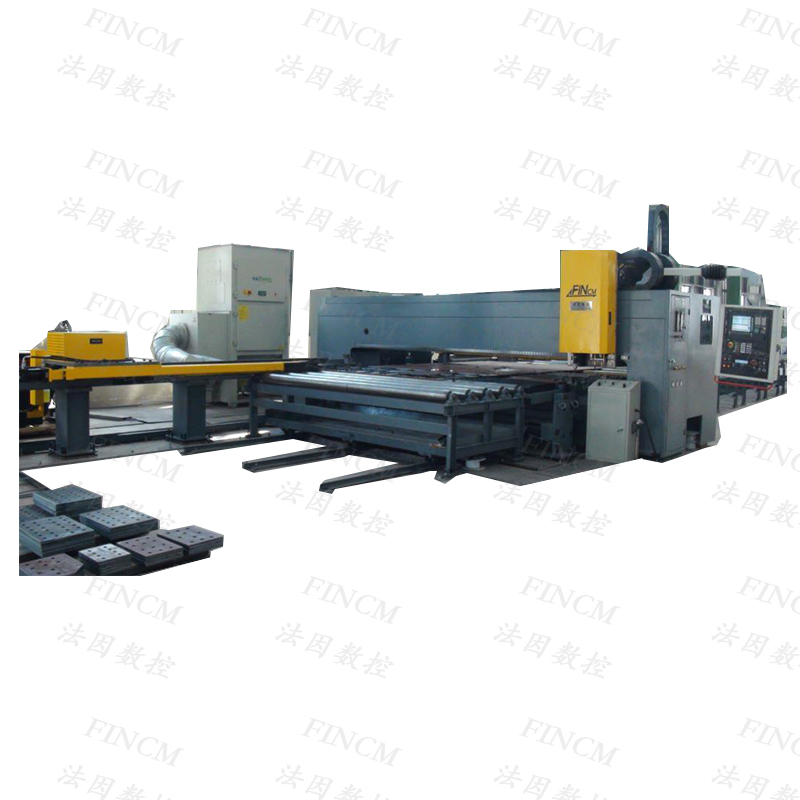
Modern CNC technology excels at consolidating multiple manufacturing steps into a single, automated process. For example, a Versatile CNC Angle Processing Machine can take a raw piece of angle steel and perform punching, shearing, and marking operations in one continuous cycle. This single machine replaces three or more separate manual stations, dramatically reducing material handling, setup time, and the potential for error between steps.
The Economics of Automation: How CNC Machines Save Costs
The financial argument for CNC adoption extends far beyond simple automation. It fundamentally restructures a company's cost profile by optimizing labor, minimizing waste, and maximizing operational uptime. The savings are not just incremental; they compound across the entire production workflow.
Reduction in Labor Overhead
CNC machining transforms the role of skilled labor. Instead of one operator being tied to one manual machine, a single skilled technician can oversee a "cell" of multiple CNC machines simultaneously. Their role shifts from repetitive physical tasks to high-value activities like programming, setup, quality control, and process optimization. This 1-to-N operator ratio dramatically reduces direct labor costs per part and allows you to allocate your most valuable human resources to tasks that require critical thinking and problem-solving.
Waste Mitigation
Manual machining is inherently prone to human error, leading to scrapped parts and wasted material. CNC machines eliminate this "human error tax" through unparalleled repeatability. Once a program is verified, the machine can produce hundreds or thousands of identical parts with tolerances measured in microns. This precision drastically reduces rejection rates, often from double-digit percentages in manual operations to less than 1% with CNC. The savings on raw materials, especially when working with expensive alloys, can be substantial.
Manual vs. CNC Cost Factors: A Comparison
| Cost Factor | Manual Machining | CNC Machining |
| Labor Model | 1 Operator per Machine | 1 Operator per 3-5 Machines |
| Typical Scrap Rate | 5% - 15% | < 1% |
| Setup Time | High (per part) | High (initial setup), then near-zero (per part) |
| Operational Hours | Limited by shifts | 24/7 capability (lights-out manufacturing) |
Cycle Time Optimization
To understand efficiency, you must distinguish between "machining time" and "cycle time."
Machining Time: The time the cutting tool is actively engaged with the workpiece.
Cycle Time: The total time to produce one part, including loading raw material, unloading the finished part, tool changes, and any other non-cutting movements.
CNC machines attack both. They optimize tool paths to reduce machining time and automate tool changes and workpiece positioning to slash the non-cutting portions of the cycle. This holistic approach ensures maximum throughput and a lower cost per part.
Energy Efficiency
Older manufacturing equipment often consumes maximum power regardless of its operational state. Modern CNC machines are far more intelligent. They feature energy-saving modes that power down auxiliary systems like coolant pumps, conveyors, and high-power hydraulics during non-cutting cycles. Research shows these auxiliary systems can account for up to 85% of a machine's idle energy consumption. By optimizing power usage during the entire cycle, modern CNC units significantly reduce a factory's overall electricity bill.
Industry Spotlight: CNC Machines for Steel Tower & Infrastructure
General-purpose CNC machines are workhorses, but they often fall short in specialized, heavy-duty applications like fabricating components for steel towers, bridges, and other large infrastructure projects. This sector presents unique challenges of scale, material toughness, and stringent compliance that demand purpose-built equipment.
The Scale Challenge
Standard CNC mills and routers are designed for smaller workpieces and lighter materials. They lack the structural rigidity, spindle torque, and bed size required to handle the long, heavy angle iron and steel plates used in tower construction. Attempting to use a standard machine for these tasks results in excessive tool wear, poor accuracy, and potential machine damage. A specialized CNC Machine For Steel Tower fabrication is engineered from the ground up to manage these immense loads without compromising precision.
High-Volume Precision
Structural steel fabrication involves highly repetitive tasks, such as punching hundreds of bolt holes in a precise pattern. Specialized CNC angle processing lines are optimized for this exact workflow. They feature powerful hydraulic punching heads, high-tensile shearing stations, and robust clamping systems that can process entire lengths of steel in a single, automated pass. This ensures every hole is perfectly placed and every cut is clean, which is critical for on-site assembly where misaligned components can cause catastrophic delays.
Compliance & Safety
Infrastructure projects are governed by strict safety and quality standards, such as those from ASTM International or ISO. CNC machines provide an inherent advantage in meeting these requirements. Every operation is digitally controlled and logged, creating a verifiable record of production. This repeatable accuracy ensures that every component meets the specified tolerances, a claim that is difficult to substantiate with manual processes. Furthermore, the automated nature of these machines reduces operator exposure to heavy materials and powerful machinery, significantly improving workshop safety.
Durability vs. Speed
The environment in a steel fabrication shop is harsh. It’s dusty, subject to extreme temperatures, and operates on demanding schedules. CNC machines for this industry are built for durability, with features like:
Heavy-duty welded steel frames for vibration dampening.
Sealed electronic cabinets to protect from dust and debris.
High-torque servo motors capable of 24/7 operation.
Automated lubrication systems to reduce maintenance.
This rugged construction ensures the machine can maintain high-speed throughput day after day without sacrificing the accuracy essential for critical infrastructure components.
Evaluating Total Cost of Ownership (TCO) and ROI
A smart CNC investment decision goes far beyond the initial purchase price. The true cost of a machine is revealed over its entire lifecycle. Evaluating the Total Cost of Ownership (TCO) provides a realistic financial picture and helps identify the solution with the best long-term return on investment (ROI).
The "Iceberg" Pricing Model
The sticker price of a CNC machine is just the tip of the iceberg. It often represents only about 20-30% of the total cost over the machine's life. The submerged, hidden costs are what truly impact your bottom line. These include:
Maintenance & Consumables: Regular servicing, replacement parts, cutting tools, and fluids.
Tooling & Fixturing: The cost of work-holding solutions and specialized cutters.
Energy Consumption: The electricity required to run the machine and its support systems.
Training & Labor: The cost to train operators and programmers.
Downtime: The massive opportunity cost when a machine is not producing parts.
A cheaper machine with poor reliability and expensive parts can easily become the most expensive asset on your shop floor.
Regional Sourcing Realities
Sourcing a machine from overseas can appear attractive due to a lower initial price. However, this decision involves significant trade-offs that must be carefully analyzed. Consider the following:
| Factor | Overseas Sourcing | Local/Regional Sourcing |
| Purchase Price | Often lower | Often higher |
| Shipping & Tariffs | High, can add 10-30% to cost | Low to moderate |
| Service & Support | Delayed, language barriers | Fast, local technicians |
| Spare Parts Lead Time | Weeks to months | Days |
| Training | Remote or limited | On-site, comprehensive |
Waiting six weeks for a critical spare part from an overseas supplier can wipe out any initial cost savings through lost production revenue.
Scalability Without Friction
One of the most powerful economic advantages of CNC is its inherent scalability. The same G-code program used to create a single prototype can be used to mass-produce ten thousand units. This eliminates the enormous re-tooling costs and process development associated with scaling up manual operations. A business can seamlessly move from prototyping to full-scale production without friction, responding to market demand with incredible agility.
Predictive Maintenance
Modern CNC controllers and companion software offer powerful simulation tools. Before running a single piece of metal, a programmer can simulate the entire machining process on a computer. This virtual run-through can detect potential "machine crashes"—where the tool or spindle collides with the workpiece or fixturing. Preventing just one major crash can save tens of thousands of dollars in spindle repairs, tool replacement, and crippling downtime.
Decision Framework: Choosing the Right CNC Solution
Selecting the right CNC machine is a strategic decision that directly impacts profitability. Avoid the common mistake of buying based on a spec sheet alone. Instead, use a framework that maps machine capabilities directly to your business outcomes and production realities.
Feature-to-Outcome Mapping
Don't pay for capabilities you don't need. The most common error is over-investing in complexity. For example, a 5-axis CNC machine offers incredible geometric freedom, but if 95% of your parts are prismatic and can be made on a 3-axis machine, the extra investment and programming complexity will never deliver a positive ROI. Map every key feature to a specific, measurable outcome.
Best Practice: Before shortlisting machines, audit your 10 most common parts. Analyze their geometric complexity, required tolerances, and materials. This data-driven approach will quickly reveal your true technological needs.
Material-Specific Selection
The material you machine is a critical factor in your overall cost. Some materials are much harder to machine than others, drastically affecting cycle times and tool life. For instance, while 304 stainless steel is a common choice, 303 stainless steel is engineered for better machinability. Although the raw material cost for 303 might be slightly higher, the significantly faster machining speeds and longer tool life can make it the cheaper option for high-volume production.
Shortlisting Logic
Create a decision matrix to compare potential machines objectively. Your criteria should be weighted based on your business priorities. Key factors to include are:
Volume Requirements: Are you a high-mix, low-volume job shop (requiring fast setups) or a high-volume production facility (requiring automation and speed)? Do you operate on a Just-in-Time (JIT) or batch production model?
Tolerance Requirements: Do your parts require standard tolerances measured in millimeters, or are you producing high-precision components with tolerances measured in microns? This will dictate the need for features like thermal compensation and closed-loop feedback systems.
Operator Skill vs. Software Automation: Evaluate the skill level of your current workforce. A machine with a conversational, user-friendly control may be better for a less experienced team. Conversely, a highly automated machine with advanced CAM software can maximize output but requires a skilled programmer to support it.
Conclusion
Ultimately, CNC machining is far more than a technological upgrade for the shop floor; it is a strategic financial investment in efficiency, quality, and scalability. The journey from understanding the basic CNC meaning to implementing a solution that saves money involves looking beyond the price tag and analyzing the entire ecosystem of costs and benefits. The right machine eliminates waste, optimizes labor, and unlocks the capacity for growth. Remember, the most expensive machine is not the one with the highest purchase price—it's the one that sits idle or produces scrap. To take the next step, consult with an application engineer to audit your current cycle times and identify precisely where automation can deliver the greatest financial impact.
FAQ
Q: What is the literal CNC meaning?
A: The literal CNC meaning is "Computer Numerical Control." It refers to a manufacturing process where pre-programmed computer software dictates the movement and operation of factory tools and machinery. The computer controller reads a digital file (G-code) and translates it into precise motions of the cutting tool, automating the production of parts with high accuracy and repeatability.
Q: How does a CNC machine for steel towers differ from a standard mill?
A: A CNC machine for steel towers is a specialized, heavy-duty unit built for large-scale structural components. It differs from a standard mill in its massive size, higher spindle torque for drilling through thick steel, and integrated systems for punching, shearing, and marking long angle iron. Its construction is far more rigid to handle the extreme weight and cutting forces involved.
Q: Can CNC machining really reduce labor costs if I still need a programmer?
A: Yes, absolutely. The cost savings come from a shift in the labor ratio. Instead of needing one skilled operator for every single machine, one skilled programmer or setup technician can prepare and oversee a cell of multiple CNC machines running simultaneously. This dramatically lowers the direct labor cost attributed to each part produced.
Q: What are the most common ways to reduce CNC part costs?
A: The most effective method is Design for Manufacturability (DFM). Simple design changes can yield huge savings. These include adding generous radii to internal corners to allow for larger, faster-cutting tools; specifying standard drill and tap sizes to reduce tool changes; and designing parts that can be machined from a single setup to eliminate costly refixturing.
Q: What is the average ROI period for an industrial CNC machine?
A: The ROI period varies widely based on usage, typically from 18 months to 5 years. A simple framework to estimate it is: (Annual Profit from Machine) / (Total Machine Cost). The "profit" is calculated from labor savings, reduced scrap, and the value of increased output. A machine running two or three shifts a day will have a much faster ROI than one running a single shift.


